Ăn uống ngày cận Tết thế nào để không quá tải gan, dạ dày?
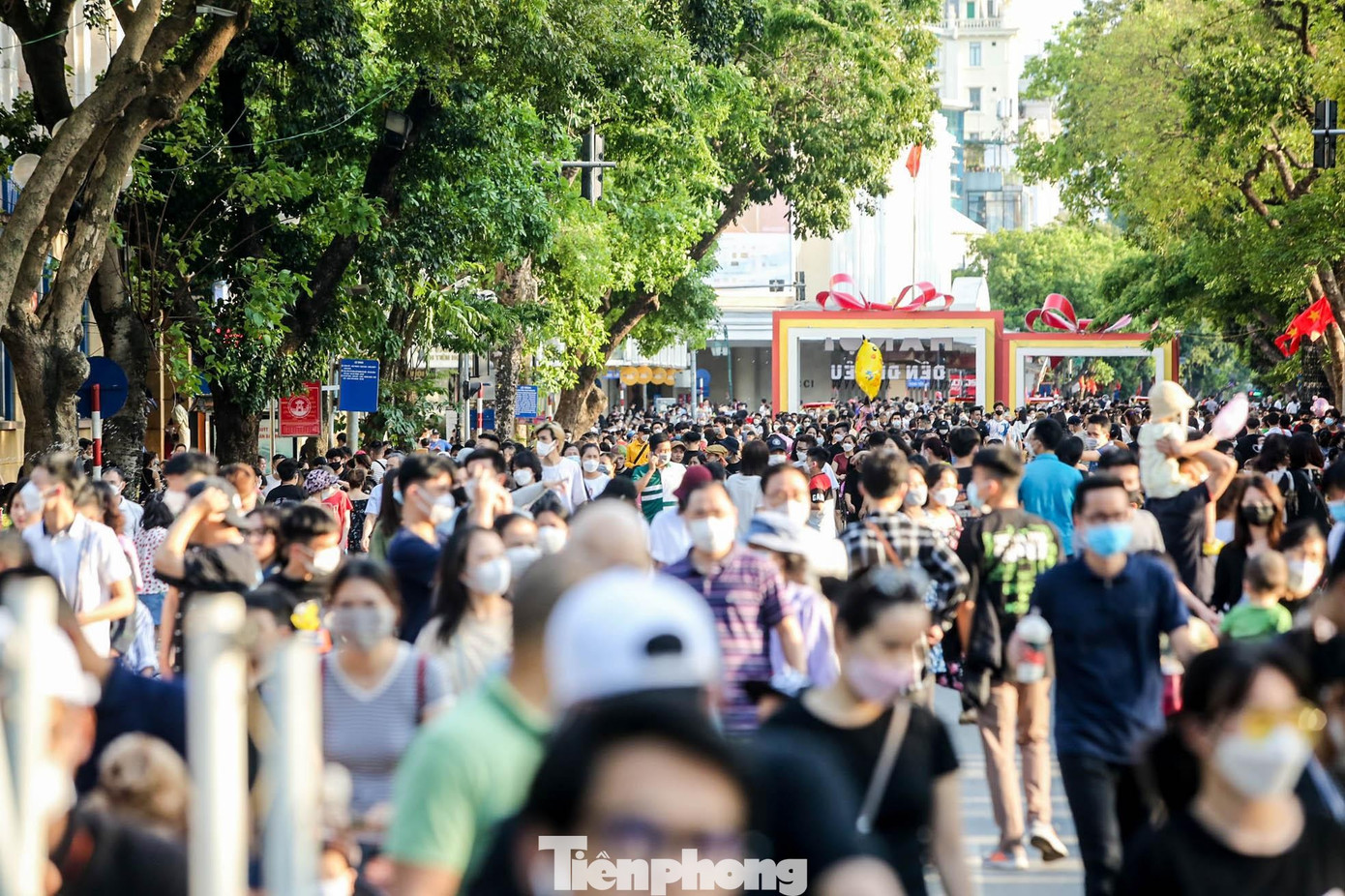
Những ngày cận Tết, nhịp sinh hoạt và ăn uống của nhiều gia đình bắt đầu thay đổi rõ rệt. Tiệc tất niên, liên hoan cuối năm, những bữa cơm sum họp sớm khiến lượng thức ăn nạp vào cơ thể tăng lên nhanh chóng, áp lực lên gan và dạ dày.
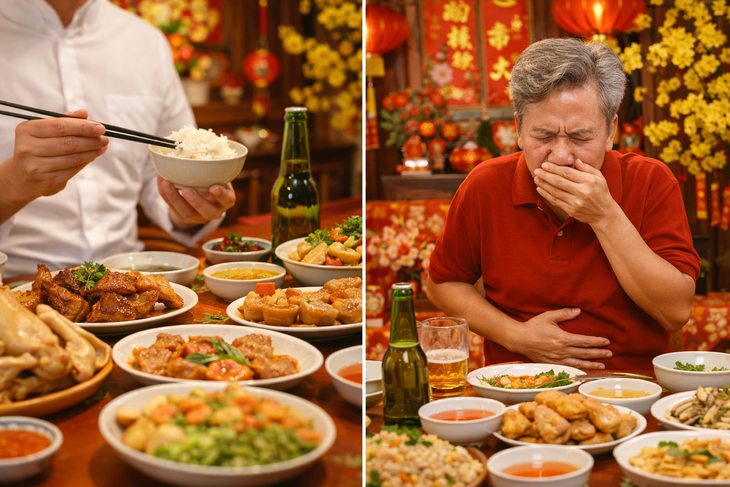
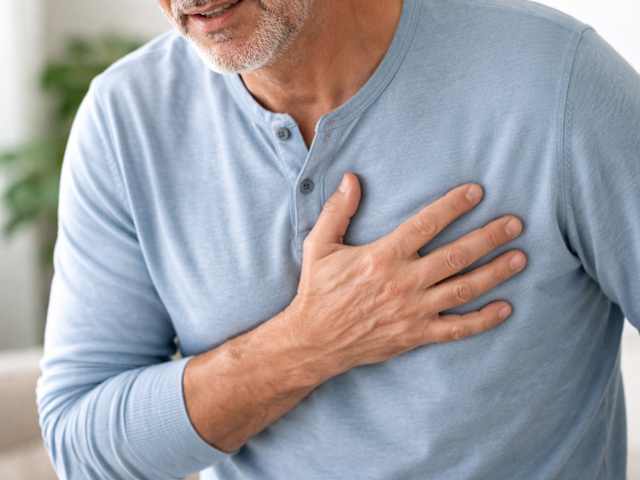
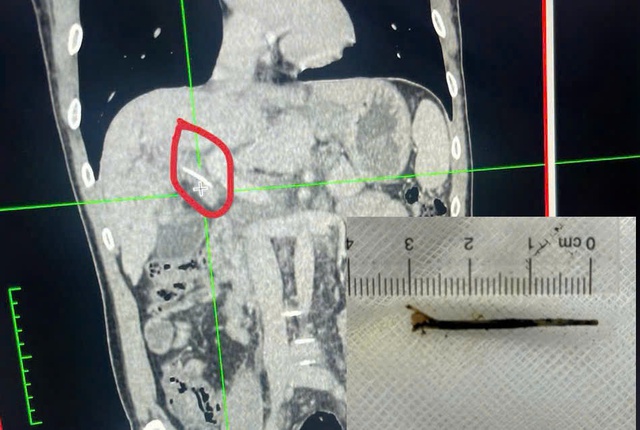
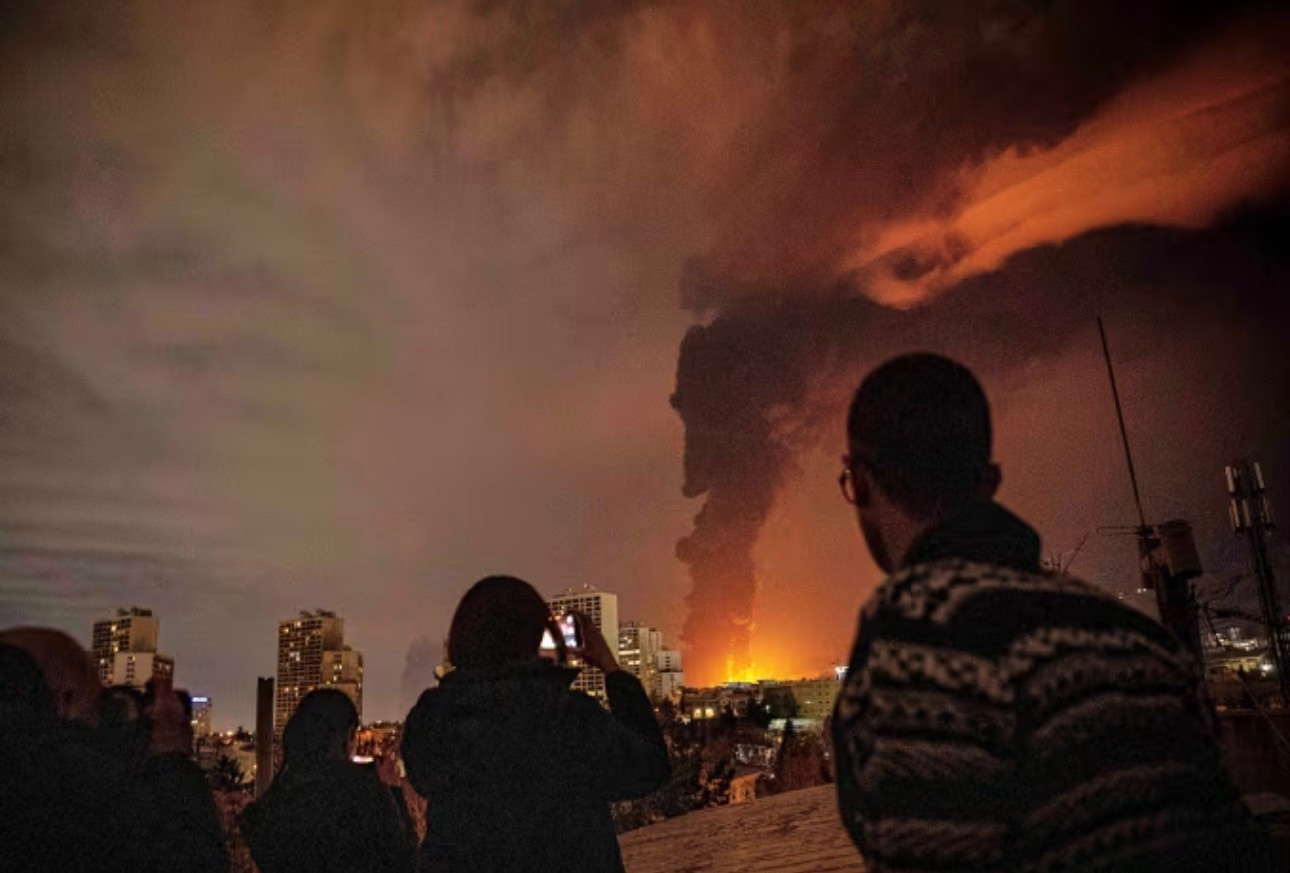
Nếu không điều chỉnh hợp lý, nhiều người bước vào kỳ nghỉ Tết trong tình trạng mệt mỏi, đầy bụng, rối loạn tiêu hóa, thậm chí phải nhập viện ngay những ngày đầu năm - Ảnh: AI
Chuẩn bị Tết không chỉ là dọn dẹp nhà cửa hay sắm sửa mâm cỗ, mà còn là chuẩn bị cho sức khỏe. Khi gan và dạ dày được "giữ sức" từ trước, cơ thể sẽ bước vào những ngày đầu năm với trạng thái nhẹ nhàng, tỉnh táo và đủ năng lượng để tận hưởng trọn vẹn không khí sum vầy.
Khi gan và dạ dày phải "gồng mình" trước Tết
Cận Tết là giai đoạn cơ thể bước vào một "mùa cao điểm" đặc biệt. Chỉ trong một đến hai tuần, khẩu phần ăn của nhiều người thay đổi gần như hoàn toàn.
Những bữa ăn thường ngày tương đối nhẹ nhàng nhanh chóng được thay bằng các bữa tiệc nhiều thịt, nhiều đạm, nhiều dầu mỡ. Thời gian ăn uống cũng bị xáo trộn khi các buổi liên hoan thường diễn ra vào chiều tối hoặc đêm muộn.
Gan và dạ dày là hai cơ quan chịu ảnh hưởng rõ nhất từ sự thay đổi này. Dạ dày phải tiếp nhận lượng thức ăn lớn trong thời gian ngắn, trong khi gan liên tục xử lý chất béo, rượu bia và các sản phẩm chuyển hóa. Khi tình trạng ăn uống quá tải diễn ra liên tiếp nhiều ngày, khả năng thích nghi của cơ thể dần suy giảm.
Không ít người bắt đầu cảm thấy đầy bụng, chậm tiêu, ăn nhanh no hoặc buồn nôn sau bữa ăn. Một số trường hợp xuất hiện ợ nóng, trào ngược dạ dày, thực quản, đau âm ỉ vùng thượng vị.
Cùng lúc đó là cảm giác mệt mỏi, uể oải, nóng trong người, nổi mụn hoặc miệng đắng vào buổi sáng, những biểu hiện thường gặp khi gan phải làm việc quá sức.
Điều đáng nói là nhiều người cho rằng đây chỉ là hiện tượng "bình thường cuối năm" nên chủ quan bỏ qua. Tuy nhiên nếu để tình trạng này kéo dài đến sát Tết, cơ thể sẽ không còn đủ "dự trữ sức" để thích nghi với những ngày nghỉ lễ chính thức, khi ăn uống còn nhiều hơn và thời gian sinh hoạt tiếp tục đảo lộn.
Bên cạnh yếu tố thực phẩm, rượu bia đóng vai trò không nhỏ trong việc làm gan quá tải. Gan chỉ có thể chuyển hóa một lượng cồn nhất định trong một khoảng thời gian nhất định.
Khi uống rượu bia liên tục nhiều ngày liền, tế bào gan không kịp phục hồi, nguy cơ tổn thương tăng lên, đặc biệt ở những người đã có gan nhiễm mỡ, men gan cao hoặc bệnh lý gan tiềm ẩn.

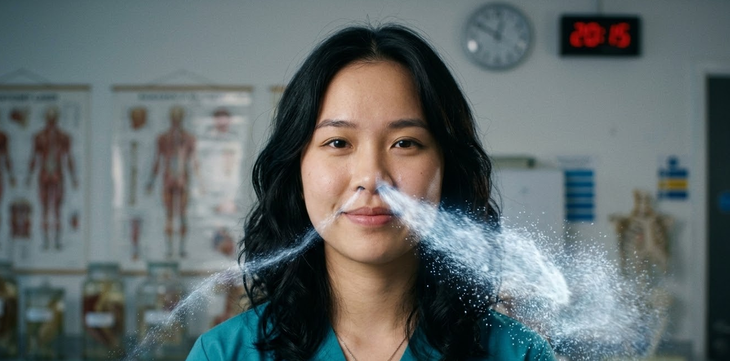
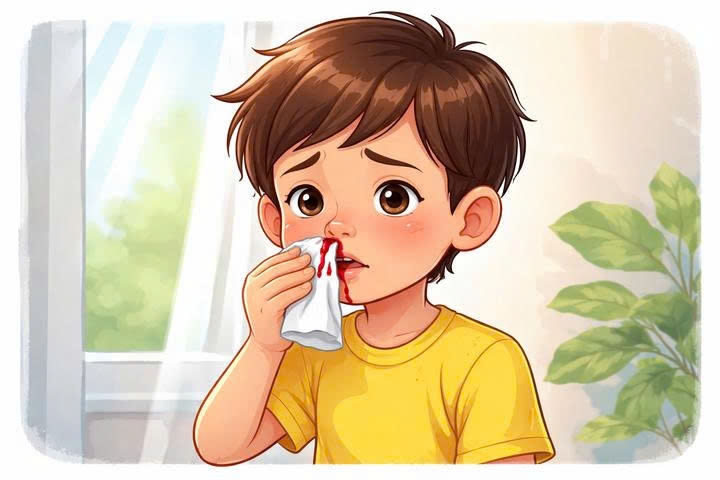
Thói quen ăn muộn, ăn dồn bữa cũng khiến dạ dày phải hoạt động vào thời điểm cơ thể cần nghỉ ngơi. Điều này không chỉ làm giấc ngủ kém chất lượng mà còn khiến các triệu chứng rối loạn tiêu hóa dễ xuất hiện ngay trong những ngày đầu năm mới - Ảnh: AI
Ăn uống thế nào để cơ thể không "đuối sức" khi Tết chưa bắt đầu?
Theo các chuyên gia Viện Dinh dưỡng quốc gia, giai đoạn cận Tết không phải lúc để "ăn bù", mà là thời điểm cần giữ sự điều độ nhằm chuẩn bị thể lực cho kỳ nghỉ dài. Việc ăn uống hợp lý trước Tết giúp gan và dạ dày có đủ khả năng thích nghi khi bước vào những ngày Tết chính thức.
Điều quan trọng đầu tiên là duy trì nhịp bữa ăn tương đối ổn định. Dù có tiệc tất niên hay liên hoan, vẫn nên giữ bữa sáng và bữa trưa nhẹ nhàng, tránh để cơ thể rơi vào tình trạng đói kéo dài rồi ăn quá nhiều trong một bữa tối. Khi phải dự tiệc, ăn chậm, ăn vừa đủ và tránh tâm lý "ăn cho xong" giúp giảm đáng kể áp lực lên dạ dày.
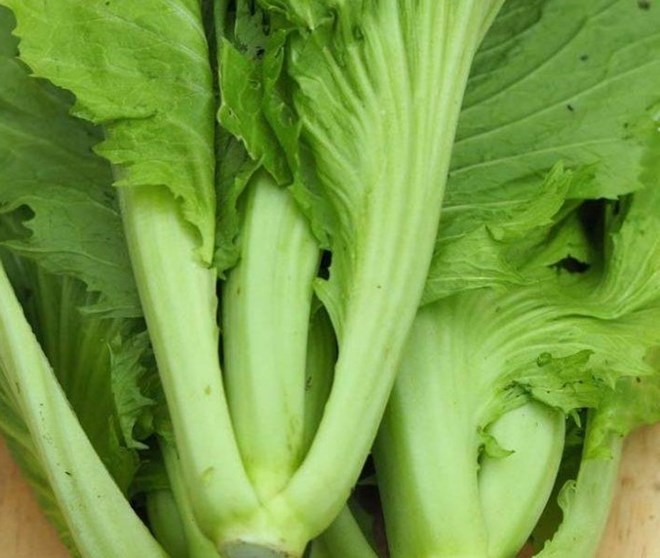
Trong những ngày này, bữa ăn cần được cân bằng lại bằng rau xanh và thực phẩm giàu chất xơ. Rau không chỉ hỗ trợ tiêu hóa mà còn giúp giảm hấp thu chất béo, hỗ trợ gan hoạt động nhẹ nhàng hơn. Việc bổ sung các món canh, món luộc, món hấp giúp cơ thể dễ chịu hơn so với việc ăn liên tục các món chiên rán, kho đậm.
Rượu bia nên được tiết chế, gan cần thời gian nghỉ ngơi giữa các lần chuyển hóa cồn. Nếu phải uống trong các buổi gặp mặt, việc giảm số lượng và uống kèm nước lọc có thể giúp hạn chế phần nào tác động tiêu cực.
Nước và giấc ngủ cũng là hai yếu tố thường bị xem nhẹ trong giai đoạn này. Khi ăn nhiều đạm, uống thiếu nước, cơ thể dễ rơi vào trạng thái mệt mỏi và táo bón. Ngủ muộn kéo dài khiến gan không có đủ thời gian thực hiện các hoạt động chuyển hóa và phục hồi vào ban đêm, làm cảm giác nặng nề tích tụ từng ngày.
Với những người có bệnh lý nền như viêm dạ dày, trào ngược, gan nhiễm mỡ, tiểu đường hoặc rối loạn mỡ máu, việc kiểm soát ăn uống cận Tết càng trở nên quan trọng. Chỉ cần vài ngày sinh hoạt quá đà cũng có thể khiến bệnh tái phát, khiến Tết trở thành khoảng thời gian điều trị thay vì nghỉ ngơi.
As Tet (Lunar New Year) approaches, the daily routines and eating habits of many families begin to change significantly. Year-end parties, celebrations, and early family gatherings lead to a rapid increase in food intake, putting pressure on the liver and stomach.
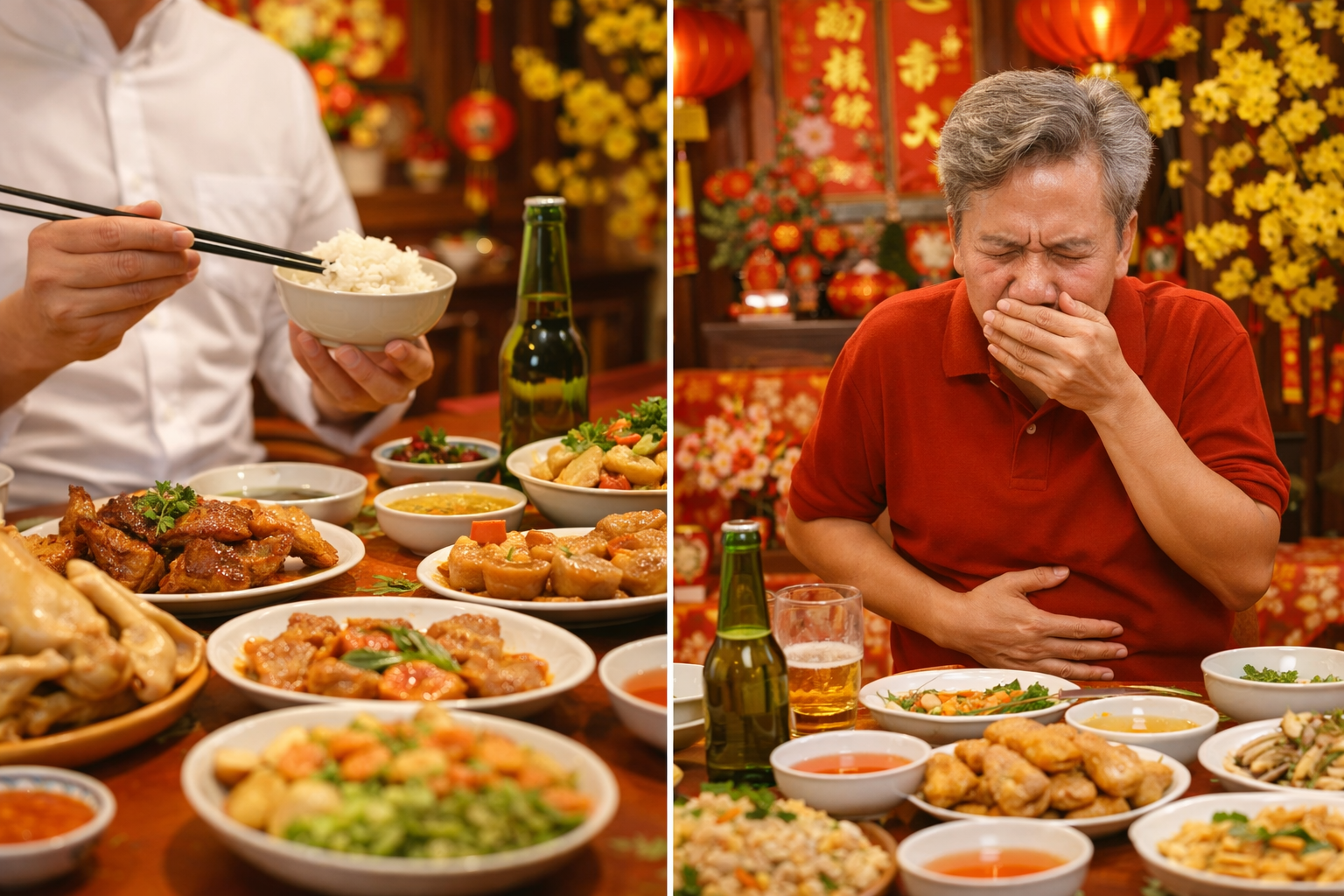
Without proper adjustments, many people enter the Tet holiday feeling tired, bloated, experiencing jdigestive disorders, and even requiring hospitalization in the first few days of the new year.
Preparing for Tet is not just about cleaning the house or preparing the feast, but also about preparing for health. When the liver and stomach are "strengthened" beforehand, the body will enter the first days of the year feeling light, alert, and energetic enough to fully enjoy the festive atmosphere.
When the liver and stomach have to "struggle" before Tet
The period leading up to Tet is a particularly busy time for the body. In just one to two weeks, many people's diets change almost completely.
Relatively light and quick daily meals are replaced by lavish feasts high in meat, protein, and fat. Eating times are also disrupted, with these gatherings often taking place in the late afternoon or late at night.
The liver and stomach are the two organs most affected by this change. The stomach has to process large amounts of food in a short time, while the liver continuously processes fats, alcohol, and metabolic products. When this overeating continues for many consecutive days, the body's ability to adapt gradually decreases.
Many people begin to feel bloated, have slow digestion, feel full quickly, or experience nausea after meals. Some cases involve heartburn, acid reflux, and dull pain in the upper abdomen.
At the same time, there are feelings of fatigue, lethargy, internal heat, acne, or a bitter taste in the mouth in the morning – common symptoms of an overworked liver.
It's worth noting that many people consider this just a "normal end-of-year phenomenon" and therefore ignore it. However, if this situation continues until close to Tet (Lunar New Year), the body will no longer have enough "energy reserves" to adapt to the official holidays, when eating and drinking will be even more frequent and daily routines will be further disrupted.
Besides food, alcohol plays a significant role in overloading the liver. The liver can only metabolize a certain amount of alcohol within a certain period of time.
When drinking alcohol continuously for many days in a row, liver cells don't have time to recover, increasing the risk of damage, especially in people with fatty liver disease, high liver enzymes, or underlying liver disease.

The habit of eating late or having large meals also forces the stomach to work when the body needs to rest. This not only leads to poor sleep quality but also makes digestive disorders more likely to appear in the first days of the new year - Photo: AI
How to eat to avoid exhaustion before Tet (Lunar New Year) begins?
According to experts at the National Institute of Nutrition, the period leading up to Tet is not the time to "compensate for overeating," but rather a time to maintain moderation to prepare your body for the long holiday. Eating properly before Tet helps the liver and stomach adapt when the official Tet days begin.
The first important thing is to maintain a relatively stable meal schedule. Even with year-end parties or celebrations, keep breakfast and lunch light, avoiding prolonged hunger followed by overeating at dinner. When attending parties, eat slowly, eat just enough, and avoid the mentality of "just to finish," which significantly reduces pressure on the stomach.
During these days, meals need to be balanced with green vegetables and fiber-rich foods. Vegetables not only aid digestion but also help reduce fat absorption, supporting the liver in working more efficiently. Adding soups, boiled dishes, and steamed dishes makes the body feel more comfortable compared to continuously eating fried or heavily stewed foods.
Alcohol should be moderated; the liver needs time to rest between alcohol metabolism cycles. If you must drink at social gatherings, reducing the amount and drinking plenty of water can help mitigate some of the negative effects.
Water and sleep are also two factors often overlooked during this period. Eating a lot of protein and not drinking enough water can easily lead to fatigue and constipation. Prolonged late nights prevent the liver from having enough time to perform metabolic and recovery activities at night, causing a feeling of heaviness to accumulate day by day.
For those with underlying conditions such as gastritis, reflux, fatty liver disease, diabetes, or dyslipidemia, controlling their diet before Tet becomes even more crucial. Just a few days of excessive activity can cause the illness to relapse, turning Tet into a time for treatment instead of rest.